

When Eventuri set out to develop an intake system for the C8 ZR1, the objective was not incremental improvement. The goal was to completely re-engineer the intake architecture around the LT7 platform and remove the constraints imposed by the factory system.
From the beginning, it was clear this would not be a conventional intake upgrade.

Understanding the Limitation of the OEM System
The factory ZR1 intake is derived from the LT6 Z06 airbox. While effective for the naturally aspirated platform, it introduces clear restrictions when paired with the higher-output LT7 engine and its turbocharged configuration.
Packaging constraints, particularly around the trunk panel, limit internal volume and airflow path optimization. This results in increased restriction, reduced efficiency at higher load, and a noticeable bottleneck in the mid-range where the engine has the most to gain.
As Bilal explained during development:
“The OEM system is fundamentally constrained by packaging. Once you remove those constraints, you unlock the ability to design for airflow first, not compromise around space.”
That philosophy drove the entire direction of the project.

Designing Without Constraints
By eliminating the factory trunk panel limitations, Eventuri was able to engineer a significantly larger intake system with a more organic internal geometry.
The result is a high-volume intake architecture designed to:
- Reduce pressure drop across the system
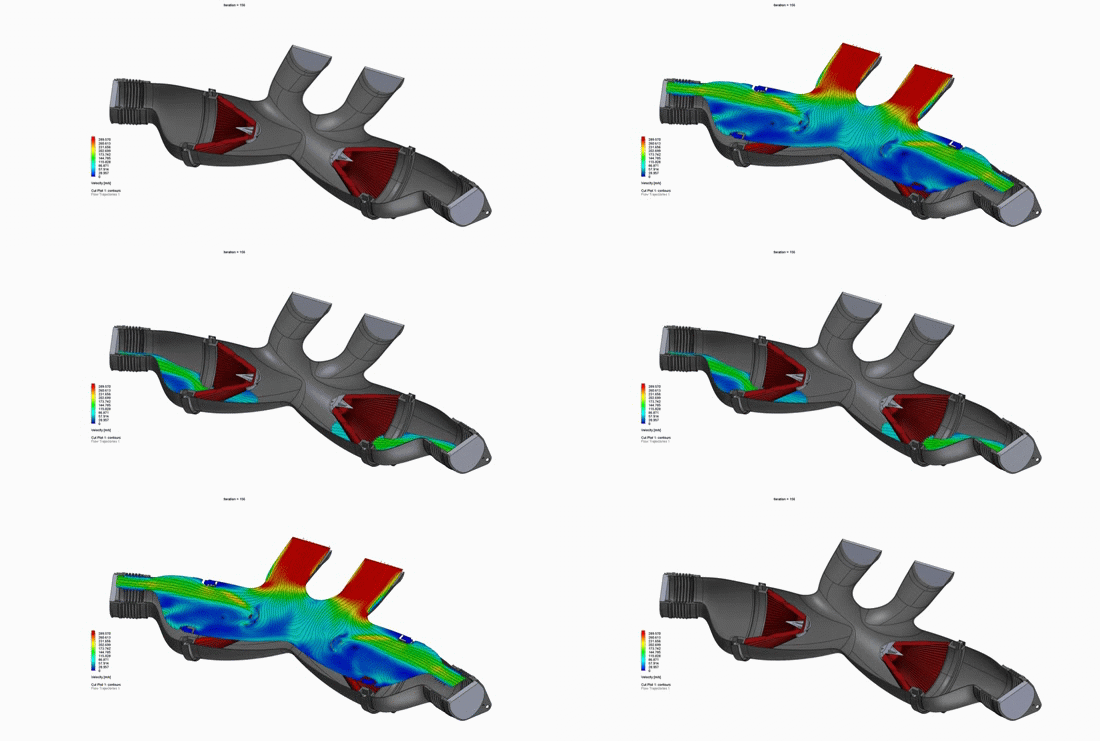
- Maintain laminar airflow through the intake path
- Improve turbocharger efficiency and response
One of the most critical changes came from the turbo inlet tubes. Through careful packaging analysis, Eventuri increased internal volume by approximately 30 percent compared to OEM.
This is not just a size increase. The tubes were redesigned with a more progressive curvature and consistent cross-sectional area, allowing air to flow more smoothly into the turbos without disruption.


The Venturi Effect in Practice
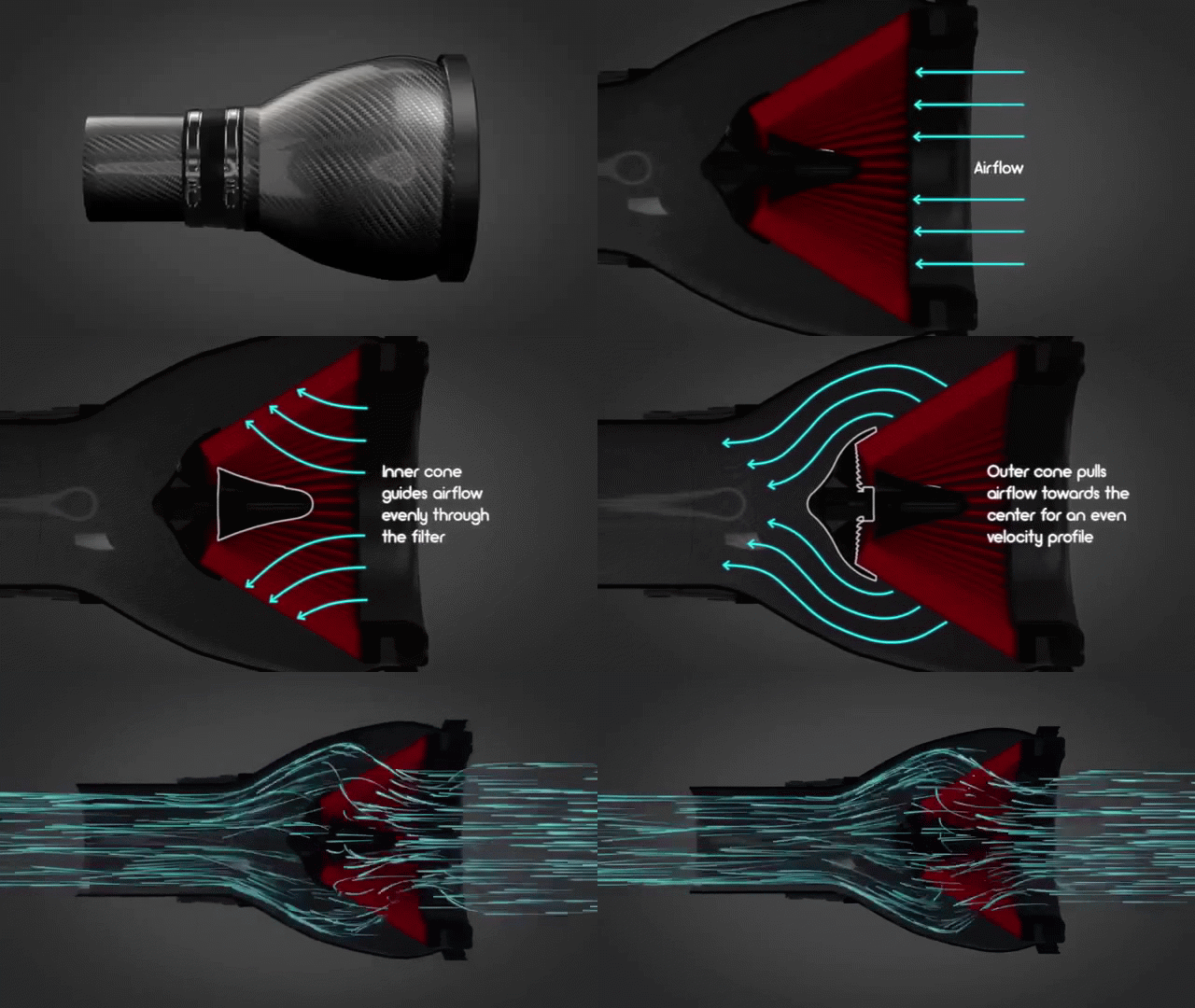
At the core of the system is Eventuri’s patented Venturi housing design.
Rather than simply increasing airflow volume, the housing is engineered to control how that airflow behaves. As air moves through the system, the cross-sectional area gradually reduces, accelerating velocity while maintaining laminar conditions.
This creates a Venturi effect similar to a velocity stack, where airflow is both faster and more stable by the time it reaches the turbochargers.
The result is improved boost response, more consistent airflow delivery, and measurable gains throughout the RPM range.
CFD, Testing, and Real-World Validation
This was not a theoretical exercise.
Extensive CFD analysis was used to refine the internal geometry, focusing on minimizing turbulence and maintaining uniform flow characteristics through the MAF sections and into the turbochargers.
But the real validation came through dyno and on-car testing.
Working closely with Paragon Performance, each prototype was tested, logged, and refined. Special thanks to Korey and the team at Paragon Performance for their involvement throughout the process and for helping validate the performance gains under real-world conditions.
Testing methodology was tightly controlled:
- Stock vehicle baseline runs at stabilized temperatures
- Intake installed without removing the vehicle from the dyno
- Repeated runs under consistent conditions
Even with higher ambient temperatures during post-installation testing, the results were significant.
The Results
The gains achieved with the C8 ZR1 intake are well beyond what is typically expected from an intake system.
- Up to 110 wheel horsepower and 108 lb-ft of torque in the mid-range
- Peak gains of 36 wheel horsepower and 101 lb-ft
- Substantial improvement in throttle response and acceleration

What stands out most is not just the peak number, but the consistency of gains across the entire RPM range.
As Bilal put it:
“It’s not about chasing peak numbers. It’s about improving the entire powerband. That’s where the real driving difference is.”
Thermal Management and Airflow Control
Airflow efficiency is only part of the equation. Managing temperature is equally critical.
The intake system incorporates sealed carbon fiber ducts that channel ambient air directly from the side vents into the filter housing. These ducts are sealed using neoprene gaskets and secured at multiple points to prevent heat soak from the engine bay.
Custom inlet flanges and flexible hose connections ensure that cold air feeds remain isolated, even under load and during extended driving.


A Functional Design Statement
One of the most unique aspects of the system is the clear polycarbonate trunk panel.
Originally redesigned to accommodate the increased intake volume, it became an opportunity to showcase the engineering itself. The result is a visible carbon fiber intake system when the trunk is opened, turning the engine bay into a focal point.
Importantly, functionality is retained. On the coupe, the factory roof can still be stored as intended.


More Than an Intake
The C8 ZR1 system is not just an intake upgrade. It is a complete rethinking of how airflow should be managed in a modern turbocharged platform.
By removing OEM constraints, applying advanced engineering principles, and validating every step through testing, Eventuri has delivered a system that genuinely transforms the performance and character of the vehicle.
This is what happens when engineering leads the design process.


